W-sitting
25 Aug 2025 · Sensoryscape
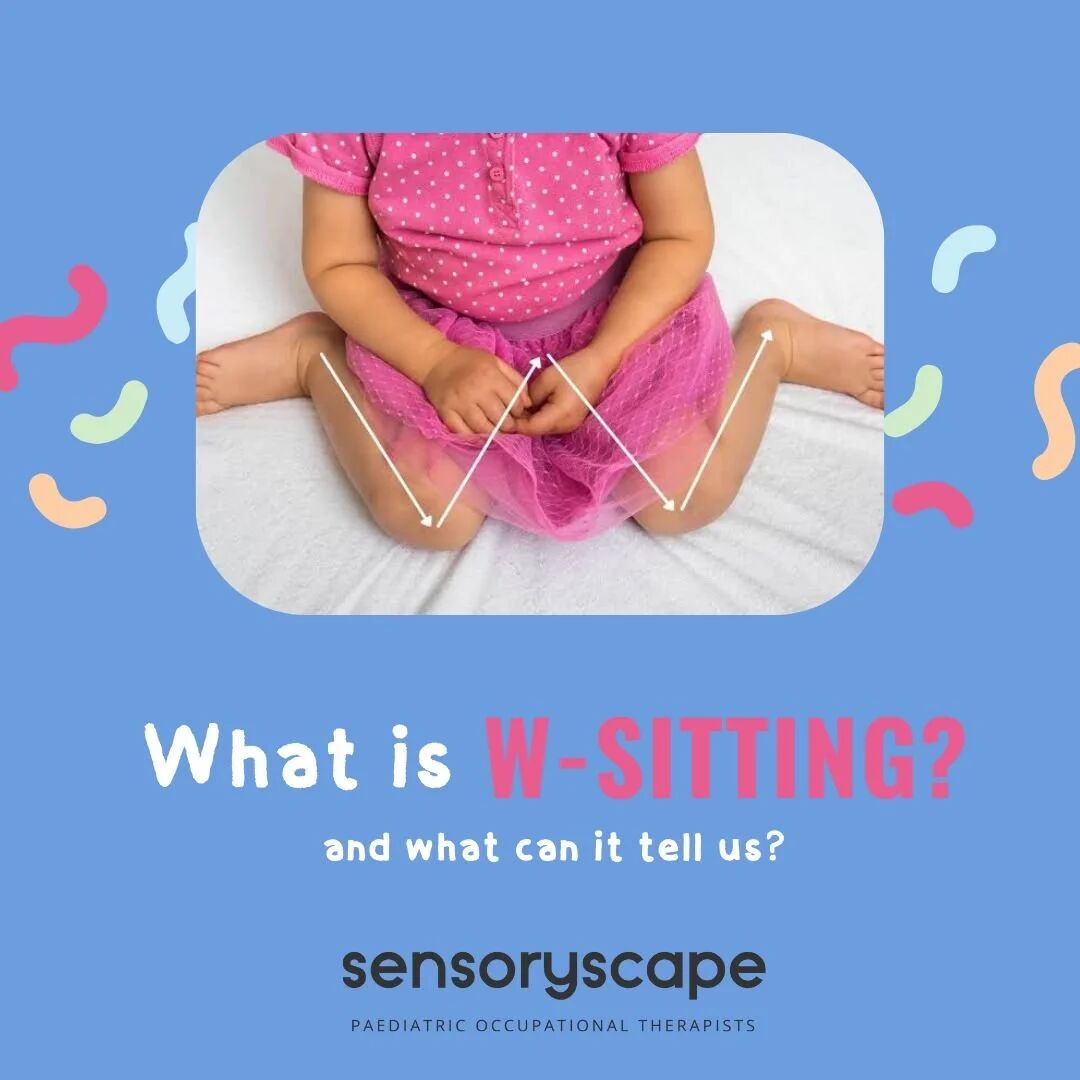
You might have seen your little one sitting on the floor with their knees bent, feet at either side and their bottom between their legs, forming a “W” shape. This is called W-sitting.
As OTs we are always promoting floor time play, and this may be a common position for young children, but it’s important to be aware of how frequent or prolonged W-sitting can affect their developing bodies.
Why children may choose this position
This position creates a wide base of support, requiring very little activation of the trunk and postural muscles. This position can be a sign of weakness in these muscles, which could impact on the development of gross and fine motor skills.
Why is W-sitting a concern?
- It can place extra stress on hips, knees and ankles, and can have an impact on the development of these joints.
- The position tends to limit the ability to rotate your trunk, which can impact balance and bilateral coordination.
- W-sitting is a static position rather than a dynamic one, so children aren’t able to fully engage with their environment in this position.
- It limits core strength development.
Encouraging alternative positions
Gently encouraging your child to change position can help break the habit of W-sitting and help your child build stronger postural muscles and motor skills. Try offering these sitting alternatives:
- Criss-cross
- Long sitting (legs straight in front)
- Side sitting
- High sitting on a small bench or chair
- Kneeling
When to seek support
If your child consistently prefers W-sitting, shows signs of a weaker core or struggles with the other positions, it might be a good idea to check in with an occupational therapist for guidance.
Our occupational therapy team is happy to help.